


What it takes to beat an Ebola outbreak
Reports of the Ebola outbreak in the Democratic Republic of the Congo (DRC) and Uganda feel eerily familiar to Al Martin, Aspen Medical’s Chief Defence & National Security Officer.
During the 2014 to 2016 West African Ebola crisis — the largest in history, which claimed more than 11,000 lives across Guinea, Sierra Leone, and Liberia — several Aspen Medical teams were deployed across the region to support international containment efforts at the request of the Australian Government.
Al served as Aspen Medical’s country director for Sierra Leone and witnessed the emergency unfold much as it is today.
His first assignment was to take over management of the Hastings Airfield Ebola Treatment Centre during what he calls “the dark days” of the escalating humanitarian crisis.
“People were still dying in their homes,” he says.
“I remember the first ambulance that arrived at the Hastings Airfield Ebola Treatment Centre had two small children sitting on top of the bodies of their parents.
“It was very confronting, very challenging, and difficult for the entire community and workforce.”
The organisation immediately set to work establishing the rigorous conditions clinicians required to safely do their jobs, ultimately saving countless lives.
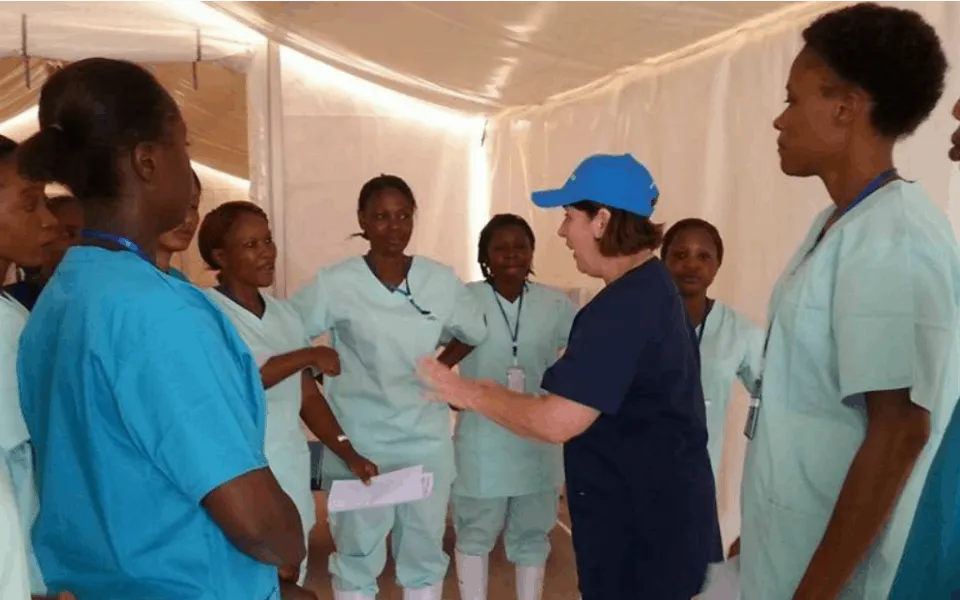
The strict safety protocols and rigorous training yielded a remarkable achievement: during the 12 months Martin lived in Sierra Leone, not a single expatriate contracted the disease, nor did any of the 600 local nationals trained by the team. It bucked the trend of infection rates among clinicians, which were up to 20 per cent.
This resounding success earned the project recognition at the 2016 World Project Management Awards, and the deployed team was honoured with the Humanitarian Overseas Service Medal.
Today, Aspen Medical is one of only two organisations globally to be classified by the World Health Organisation as an Emergency Medical Team for the management of infectious disease outbreaks.
While it might surprise people to learn that a Canberra-based company is a verified world leader in this high-stakes arena, Al notes that the lessons learned in West Africa remain entirely relevant today.
Managing the current outbreak effectively demands the same rapid mobilisation to deploy “the right people to the right place at the right time”, along with a sharp focus on overcoming critical barriers.
For a disease as infectious and deadly as Ebola, which requires constant decontamination, the priority is securing an adequate flow of Personal Protective Equipment (PPE).
But the right gear is futile without robust clinical systems to support it.
Perhaps the most complex hurdle, however, is building trust under grim circumstances.
In the early days of the Hastings Airfield Ebola Treatment Centre, the mortality rate soared to over 60 per cent.
Al explains that when a medical facility experiences such high mortality, the surrounding community naturally begins to view it with terror rather than hope.
To combat this fear, Aspen Medical introduced a psychosocial model that integrated professional mental health support for both staff and survivors.
“In those early days of the outbreak, we’d have entire family groups come in. One of the largest, with aunts, uncles and cousins, was about 15 people, and less than half of them were able to leave,” Al says.
“In all the statistics, we couldn’t forget how traumatic it was for families.
“That psychosocial support and education for the community was vital, but also educating the 600 staff that we had, so that they could take that home. Those were the most powerful tools we had in fighting the outbreak.”
This article first appeared in Region Canberra on 5 June 2026.