


A day in the life of our aeromedical retrievals team
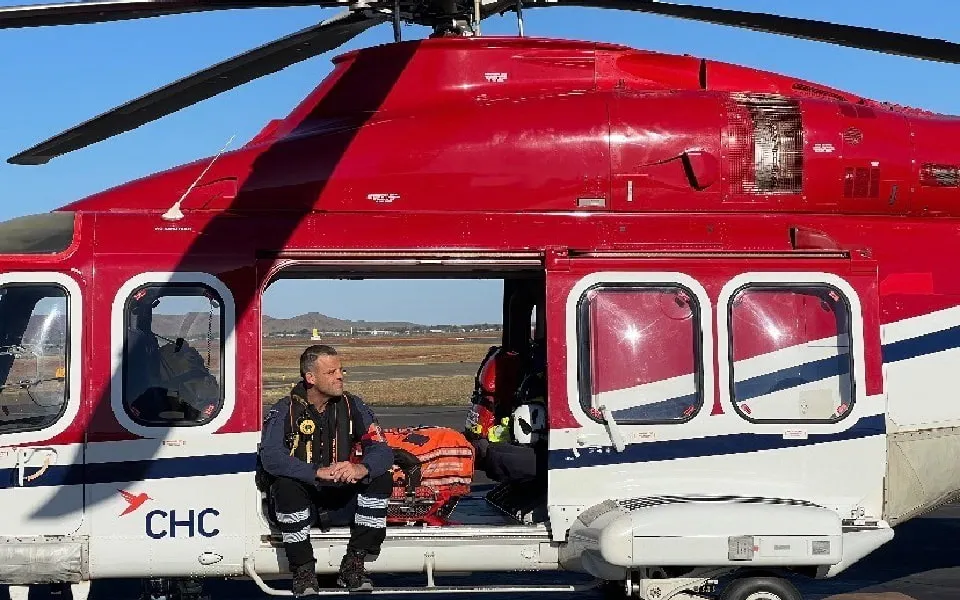
What does an aeromedical retrieval team do between missions?When people think about aeromedical retrieval, they often picture the moments that matter most – helicopters lifting off, aircraft crossing vast distances and critical care teams treating seriously ill or injured patients in flight.
What many don't see is the work that happens long before a mission begins.
For Aspen Medical Critical Care Paramedic Scott Webster, preparation is just as important as the retrieval itself. Earlier this year, Scott marked 10 years with Aspen Medical. During that time, he has supported countless aeromedical retrievals, where every decision depends on clinical expertise, teamwork and preparation.
As Scott explains in the video below, much of an aeromedical retrieval team's day is spent training.
Training is the foundation of every aeromedical retrieval
Each day begins with operational briefings covering weather conditions, aircraft availability and any factors that could affect service delivery. From there, the clinical team focuses on maintaining the skills needed to deliver high-quality care in challenging environments.
That includes reviewing specialist equipment, practising advanced clinical procedures and completing high-fidelity simulation exercises designed to replicate complex patient scenarios.
These simulations allow clinicians to refine both technical skills and communication, helping ensure they are prepared to respond confidently when every minute matters.
Teamwork is critical in retrieval medicine
Aeromedical retrieval relies on close collaboration between critical care paramedics, doctors, pilots and ground teams.
Every mission requires coordinated decision-making before, during and after a patient transfer. Regular joint training helps each member of the team understand their role while strengthening the communication and trust needed during time-critical retrievals.
As Scott explains, better preparation leads to better teamwork and ultimately better outcomes for patients.
Preparing for the moments that matter
For aeromedical retrieval teams, readiness is not something that begins when the phone rings. It is built every day through training, simulation and continuous learning.
That commitment to preparation helps ensure patients receive safe, high-quality care wherever they are, whether in a remote community, following a serious accident or during an emergency medical transfer.
Watch the video to hear Scott Webster share what life is really like when an aeromedical retrieval team isn't responding to a mission.
Video transcript
So, we're on call 24 hours a day for the two-week roster that we're here at the moment. We're doing two weeks on and two weeks off.
So essentially, the day kicks off with a morning briefing with the pilots and the SDM at about 8:30.
The pilots will go through the weather conditions, anything that's going to affect our service delivery for the day.
So that meeting will usually go for about 15 minutes in the morning.
The pilots will do a bit of a briefing.
SDM will let us know anything that's happening around the base.
And then typically after that, the clinical crew will have a bit of a
meeting, and we'll put together some training for the day, which usually involves going through some of the equipment that we use, doing refreshers and skill training.
And also, we do a lot of scenario work and a lot of high-fidelity scenario work with some of the doctors that we're lucky enough to have here are really amazing at putting on some really in-depth clinical scenarios, which kind of keeps us on our toes. So, we'll usually, at the end of our training, do some simulation training, go through the gear.
We've got obviously, as everyone would across the board there, we've got the daily checks, weekly checks, and monthly checks that we do.
But it's really important for us as a critical care team that we're always honing our skills and doing lots of simulation, and working with the ventilators, working with the infusion pumps, and things like that. So that's a typical day for us.
We work with a great team here, both on the fixed wing and in the helicopter crews.
Lots of camaraderie.