


A billion reasons why inclusive tech is no longer optional
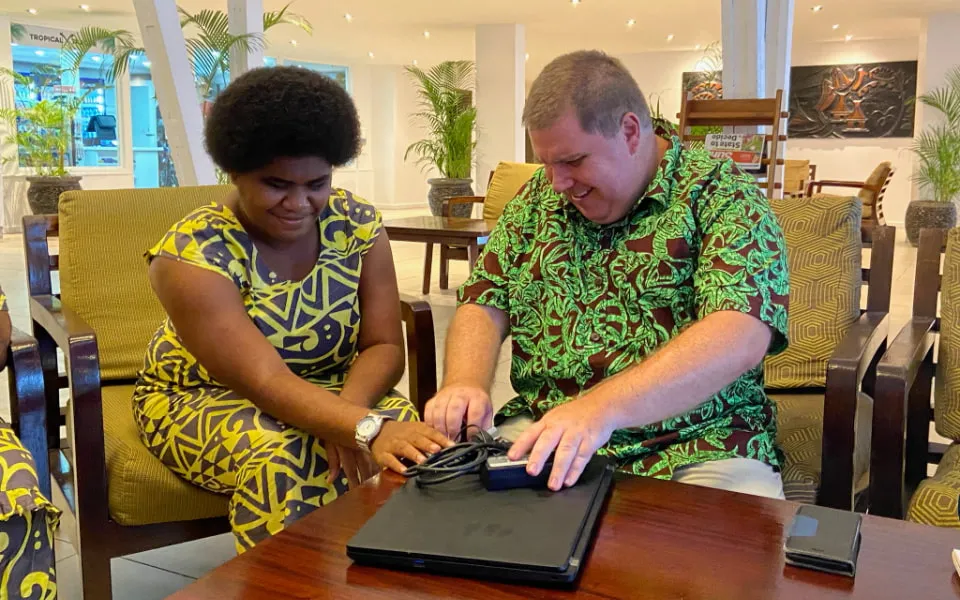
It’s the kind of thing that would drive the most patient human mad. Ben Clare had almost finished filling out a long and detailed due diligence form when right at the end, he hit a wall.
Ben, who is blind and relies on assistive technology to navigate the digital realm, could not sign his name in the provided panel — a common digital accessibility barrier.
For the one billion-plus people living with disability in the digital age, it’s so familiar an experience, there’s even a term for the feeling it provokes.
“We call it accessibility rage,” he says.
It’s a problem as old as technology itself.
While we marvel at the AI boom and transformative advances in tech, something as fundamental as a website’s formatting can contribute to a growing digital divide that vulnerable people are falling into.
Technological advances are working to bridge the accessibility gap, but not fast enough. Seemingly minor coding choices can clash with assistive technology such as screen reading and magnification software, effectively locking people with disabilities out of essential tasks like applying for a job, booking travel or signing a lease.
“The result is economic and societal exclusion,” Ben says.
“It’s not trivial. If I get a job in a workplace where the products they use are not accessible, that essentially means I can’t work there. It’s discrimination to be excluded from employment because you can’t access a product the workplace uses.”
As Disability Inclusion Lead at Aspen Medical, where accessibility and disability inclusion are primary requirements for the purchase of goods or services, Ben puts all products, services and processes through a rigorous accessibility test.
Ahead of Global Accessibility Awareness Day this Thursday 21 May, he is calling on more companies to adopt this practice as the gold standard for ensuring digital accessibility for consumers and employees.
This, he hopes, will put pressure on designers to consider accessibility from the outset.
“By having digital platforms, devices and other products accessible from the outset and without the need for expensive modification, the inclusion of a sizable population in economic and other activities is assured,” Ben says.
“By accessible, we often mean things such as alternate text on image descriptions, so that if there’s an image on the page you can’t see, you can hear what it is. Alternatives to CAPTCHA with audio options.
“It could be something as simple as turning a dropdown list into a combo box. There are accessible alternatives that do exactly the same thing, without excluding a person from using the whole service.”
While there is no formal legislation in Australia that mandates their use, Web Content Accessibility Guidelines do exist, giving designers and organisations pathways to creating accessible pages.
Ben says the fixes are generally simpler than people realise.
“Accessibility is built into a lot of products now. Microsoft, for example, has accessibility wizards in Word and Excel to help ensure people are producing accessible documents,” he says.
“Really, ensuring digital accessibility just requires an openness to three things: using accessibility guidelines, asking developers if they’re aware of them when designing products, and testing products the way we do at Aspen Medical.”
This story first appeared in Region Canberra on 21 May 2026.