


Aspen Medical Foundation supports launch of pioneering lung cancer screening vehicle
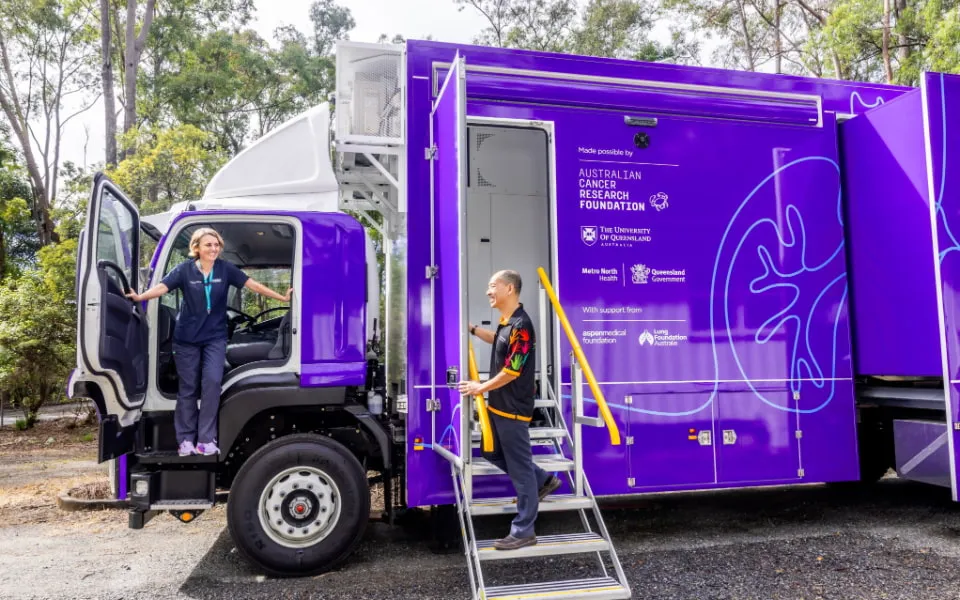
The Aspen Medical Foundation is celebrating the launch of Queensland's only lung cancer research truck, which is now on the road bringing advanced early detection research to people living in regional and remote communities.
Officially launched in Brisbane on Tuesday 4 August 2026, the mobile clinic will travel across regional Queensland, giving people the opportunity to participate in world-leading lung cancer screening research closer to home.
Led by The University of Queensland and the Australian Cancer Research Foundation in collaboration with Metro North Hospital and Health Service, the initiative will trial advanced technologies including low-dose CT scanning, AI-enabled X-ray imaging and breath and blood biomarker testing.
The project has a strong focus on improving access for people living in regional, rural and remote communities, particularly Aboriginal and Torres Strait Islander communities, where lung cancer outcomes remain significantly poorer and access to research and healthcare is often limited.
The Aspen Medical Foundation is proud to have provided financial support for the initiative as part of its commitment to improving health equity through practical, community-focused healthcare initiatives.
Australian Cancer Research Foundation Chief Executive Officer Kerry Strydom said early detection was critical to improving outcomes after diagnosis.
"We believe everyone in Australia should have the opportunity to benefit from the latest advances in cancer research and we're proud to support Professor Fong and his team as they bring this pioneering research initiative to communities across regional Queensland.
"Backing the technology and cutting-edge equipment will help achieve this."
Aspen Medical Group CEO and Aspen Medical Foundation CEO Craig Fitzgerald said the initiative reflected the Aspen Medical Foundation's commitment to improving access to healthcare where it is needed most.
"The Aspen Medical Foundation invests in initiatives that improve health outcomes by taking healthcare closer to communities," Mr Fitzgerald said.
"This project is a practical example of that mission. It removes barriers created by distance and gives people in regional and remote Australia greater access to leading-edge research and early detection technology.
"We were particularly pleased to support an initiative that has been designed to improve access for Aboriginal and Torres Strait Islander communities and help address longstanding health inequities."
Aspen Medical Foundation Chair Sian Keys said the project demonstrated the value of investing in partnerships that create lasting community benefit.
"The Aspen Medical Foundation looks for initiatives that deliver meaningful, measurable impact for communities," Ms Keys said.
"This project brings together innovation, collaboration and a genuine commitment to equitable healthcare. Rather than asking people to travel long distances, it takes research and technology directly to the communities that need it.
"We are proud to support an initiative that has the potential to improve early detection, strengthen health outcomes and make a lasting difference for regional Australians."
The lung cancer screening truck will be based at The University of Queensland Thoracic Research Centre at The Prince Charles Hospital in Brisbane before commencing its first deployment to Southwest Queensland.
ENDS